 ewsba.se
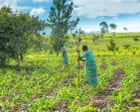
Yara CEO warns of global auction that would leave poorest countries scrambling for supplies they can ill afford
The Iran war could have “dramatic consequences”, causing food shortages and price rises in some of Africa’s poorest and most vulnerable communities, the head of the world’s largest fertiliser company has said.
Svein Tore Holsether, the chief executive of Yara International, said world leaders needed to guard against soaring prices and shortages of fertiliser causing a de facto global auction that would leave the poorest countries, particularly in Africa, scrambling for supplies they could ill afford.
“The most important thing we can do now is raise the alarm on what we are seeing right now – that there is a risk of a global auction on fertiliser that means it becomes unaffordable for those most vulnerable,” he said.
“Africa is actually quite well positioned to be a major food producer, not only for self-sufficiency, but even for exports to the rest of the world, but the reality is that they are massive food importers.
“But we need to be aware in this part of the world of the potential consequences that if we get to a global auction on food, there will not be a famine in Europe – but we need to be aware of who we are taking the food away from.”
Yara International is a Norwegian multinational with plants in 60 countries and sales in 140.
Holsether stopped short of predicting actual food shortages in parts of Africa but said he was in London to draw attention of world leaders to the possibility of things spiralling before action was taken.
“It is important to communicate the message about the danger of what potentially could happen before it is too late,” he said.
The financial intelligence company S&P Global said the impact of the war was already deepening into supply chains.
Chris Rogers, the head of supply chain research at S&P Global Market Intelligence, said: “Food supply chains face both direct and indirect challenges from fuel and fertiliser restrictions.
“The variability in Africa’s dependence on Middle East nitrogenous fertilisers is high, with Ethiopia and Kenya heavily exposed in sub-Saharan Africa.”
With 35% of the world’s supply of urea, a key ingredient in fertiliser coming from Gulf states, Yara has already seen supplies choked and the price of urea up by between “60% and 70% since the US and Israel launched their war on Iran at the end of February”.
The increase in price “has some rather dramatic consequences for those that cannot afford them”, Holsether said.
Then there is the issue of squeezed reserves and production.
“At some point you run out of inventory space,” said Holsether. “And there’s a limit to how much you can store within the production plants.”
In a double whammy, supplies of ammonia, a foundational raw material for nitrogen-based fertilisers, have also been torpedoed by the war.
Ammonia is a toxic substance that can cause serious respiratory tract damage and keeping inventories in war is so risky, some countries like Qatar have suspended production entirely.
“We are losing production every day. It will take weeks or months to restart,” said Holsether in relation to the general fertiliser production.
Fertilisers used for the sowing season, which is starting soon in sub-Saharan Africa, is one challenge for local farmers but then they face the issue of building stockpiles this summer for 2027’s crops, a routine practice in farm planning.
The EU was already taking action to help farmers, but the same support must be given in sub-Saharan Africa, Holsether said. “We need to treat farming like a business.”
Only this week the EU announced it was loosening state subsidy rules for industries along with grant aid of up to €50,000 (£43,200) for individual farmers for the extra cost of fuel or fertiliser caused by the Iran war. But in Africa those supports do not exist. They are also started from a point of compromised soil health and lack of food reserves.
“In Europe soil conditions and farming are quite optimised already, so farmers are able to reduce fertiliser consumption somewhat without dramatic consequences on the yield,” Holsether said.
“But that’s not the same in other parts of the world. You are under-fertilising to begin with. Africa, that’s where I’m most worried right now. Yet again, we are in a situation where the most vulnerable will pay the highest price.”