 ewsba.se
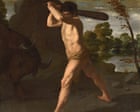
A revelatory Zurbarán show proves him the equal of Goya and Picasso, Angel Otero takes up a Somerset residency and Daiga Grantina brings nature to abstraction – all in your weekly dispatch
ZurbaránA mind-bending, revelatory exhibition packed with extraordinary loans from the Prado and other top museums that prove this painter belongs with Goya and Picasso as a Spanish great. Read the review. National Gallery, London, 2 May to 23 August
Our George CromptonGilbert & George pay homage to their late homeless friend who appeared with them in their art and shared their life. The Gilbert & George Centre, London, 1 May to 2027
Lynn ChadwickOutdoor sculptures that teeter between abstraction and expression by this post-second world war British artist. Houghton Hall, Norfolk, 2 May to 4 October
Angel OteroThickly built up, imagistic paintings by a Puerto Rico-born artist who has had a residency at this gallery in Somerset. Hauser & Wirth Somerset, 2 May to 18 October
Daiga GrantinaA Latvian sculptor based in Paris reveals her enigmatic abstract art with unexpectedly lush evocations of nature. Warwick Arts Centre, Coventry, 2 May to 28 June
First spotted on Wednesday, with the artist’s signature scrawled at the base of the plinth, the elusive artist Banksy later confirmed a new statue in central London was one of his works. The sculpture depicts a man marching forward off a plinth while carrying a large, billowing flag that obscures his face. A video Banksy posted on social media shows the statue being towed to Westminster in the dead of night. Read the full story
An 8ft statue of screen boxer Rocky is the centrepiece of a show about monuments
The director who succeeds Maria Balshaw at the Tate galleries has a tricky job ahead
Johnnie Shand Kydd, famed for photographing the YBAs, is focused on his lurchers
Our correspondent and her son took a child’s eye look at Yorkshire Sculpture Park
Loie Hollowell’s anatomical abstractions draw on Georgia O’Keeffe – and hormones
Paulo Nimer Pjota began graffiti art at 13. Now he’s taken over a London gallery
Francisco de Zurbarán had extraordinary supernatural visions
The roots of Nancy Holt’s spectacular land art can be found on a small sheet of paper
Artist and DJ Linett Kamala has reinvented maypole dancing with dancehall and drum’n’bass
The billionaire Spurs owner is selling off his Klimts, Matisses and Freuds
Saint Mary Magdalene by Guido Reni, 1634-5
Bold and passionate images of women often appear in 17th-century art of the “baroque” age. It’s not a coincidence that Artemisia Gentileschi was able to express herself in this style, for it seemed open to women being centre stage. But why, in such a patriarchal period, was that possible? Guido Reni, a fervent, often very haunting artist of suffering saints and scenes from Greek myth, here depicts the penitent Magdalene, who in medieval folklore was a reformed prostitute, identified by her fiery red robe and long sensual hair. She’s sorry for her sins and stares up at heaven, praying for God’s forgiveness. So far, so misogynistic, you may say. But the purpose of baroque religious paintings like this is to elicit empathy and identification. Sinners – and who doesn’t sin from time to time – are invited to put themselves in Mary Magdalene’s place, to share her longing for absolution. So she is not an object seen from outside, but a vessel for subjective religious feeling and mystical transports. The onlooker, female or male, melts into her sorrow. National Gallery, London